

Best Baseball Cards to Collect in 2026: Vintage Icons, Modern Stars & Underrated Sets
Key Takeaways
This guide is built for collectors returning to the hobby or those already into sports cards who want a clear roadmap for what baseball cards to collect in 2026. Whether you stepped away in the 1990s or just want sharper focus, this breakdown covers realistic targets.
- 01Underrated sets like 2002 Topps Pristine and 2008 Topps Chrome offer strong checklists at lower entry prices than hyped releases.
- 02Five cornerstone rookies anchor any modern collection: Mike Trout, Albert Pujols, Shohei Ohtani, Aaron Judge, and Ichiro Suzuki.
- 03Vintage and modern collecting require different strategies: scarcity vs. parallels, condition sensitivity vs. serial numbering, stable appreciation vs. performance-driven volatility.
- 04The top 20 list ranks cards by attainability, not just million-dollar grails—most entries are achievable for dedicated collectors.
- 05Every section includes concrete years, set names, and card numbers you can plug directly into eBay or COMC searches.
- 06Try our Free 2-MinuteSports & TCG Card Sales Tax Optimizer Quiz to see where you can optimize your business and collection for tax and estate efficiency.
Why Baseball Cards Are Still Worth Collecting in 2026
The 2020-2021 card boom drove prices to unsustainable highs. The market has since cooled, which actually benefits smart collectors entering or re-entering now. Stabilized values mean less hype-driven pricing and more realistic purchases.
Baseball cards blend fandom, nostalgia, and investing in ways few collectibles can match. The 2011 Topps Update Mike Trout US175 and 2018 Topps Chrome Shohei Ohtani rookies both surged during the boom, corrected sharply, and have since stabilized at sustainable levels. This pattern creates opportunities for patient buyers.
Graded cards (PSA, BGS, SGC) add liquidity and price transparency. A PSA 9 Trout Update typically commands mid-three figures; PSA 10s push into four figures. Understanding these tiers helps set realistic goals.
This guide focuses on cards you can chase on eBay, COMC, shows, and local card shops—not museum pieces like the T206 Honus Wagner that sells for millions. The hobby rewards collectors who know what they’re hunting for.
Vintage vs. Modern: How Your Collecting Strategy Should Change
A 1955 Topps common and a 2020s Topps Chrome parallel are the same size card, but they represent totally different games. Your approach needs to adjust accordingly.
Vintage generally means pre-1980 (some collectors draw the line at pre-1975). True scarcity defines this era—print runs were smaller, and decades of attrition eliminated most copies. Condition sensitivity is extreme: centering, corner wear, and surface imperfections dramatically impact value. The 1963 Topps Mickey Mantle #200 has only 40 known copies in PSA 9 versus 396 in PSA 8. That PSA 8 recently sold for $8,700, showing 216% growth.
Modern and ultra-modern(late 1990s to present) focuses on parallels, refractors, serial numbering, and pack odds. The 2011 Topps Update Trout was printed in massive quantities—thousands exist in various grades. Scarcity comes from condition and parallel status, not absolute production limits.
Risk profiles differ substantially. Vintage cards appreciate steadily with historical significance. Modern cards are performance and hype-driven: Aaron Judge’s 2017 rookies spiked when he broke the AL home run record in 2022, then corrected as initial euphoria settled. Mike Trout’s values have “dipped slightly as Trout battles injuries.”
Underrated Baseball Card Sets You Should Be Looking At
Most collectors chase obvious sets like 2011 Topps Update or 2009 Bowman Chrome Trout autos. But long-term value and genuine fun often hide in less-hyped releases that flew under the radar.
Underrated sets offer lower entry prices, strong checklists with star players, excellent designs, and upside if the market eventually “discovers” them. For returning collectors, this represents a sweet spot between affordability and quality.
2002 Topps Pristine and 2008 Topps Chrome stand out as the two primary underrated focuses. Both feature chromium stock, refractor technology, and checklists loaded with future Hall of Famers. The following subsections break down specific targets with card numbers and parallel details.
2002 Topps Pristine: A Forgotten Gem of the Chrome Era
2002 Topps Pristine was a premium release featuring thick chromium stock, encased “Uncirculated” base cards, refractors, and relics. It commanded respect as an aspirational product for serious collectors at the time.
Today it’s underrated because modern collector awareness is low. Fewer break videos feature the set, and social media hype concentrates elsewhere. This creates buying opportunities.
Key cards to target:
2002 Topps Pristine Albert Pujols(second-year card): Base and refractor parallels appeal to collectors who want early Pujols chromium without paying true rookie premiums.
2002 Topps Pristine Ichiro: Coming off his 2001 ROY/MVP season, early MLB Ichiro chromium carries international demand.
Notable rookies: Joe Mauer and Jose Reyes appear in this set. Position collectors actively pursue Mauer cards even if values don’t approach Trout levels.
The thick chromium stock creates genuine scarcity in high grades—edge chipping and surface scratching are common. Chase BGS/PSA 9s on star players, seek sealed “Uncirculated” slabs, and avoid surface-scratched raw copies unless deeply discounted.
2008 Topps Chrome: Modern Design, Sneaky Great Checklist
2008 Topps Chrome emerged during the late-2000s chrome boom with strong photography, refractors, and on-card rookie autos. It’s part of sports history that often gets overlooked.
The set is underrated because it was overshadowed by the 2011-2018 explosion years. Fewer marquee hobby grails emerged from 2008, and less influencer coverage keeps singles affordable.
Key rookies and stars:
2008 Topps Chrome Clayton Kershaw RC #196: X-Fractor, Blue Refractor /199, Gold /50, Red /25, and Superfractor 1/1 parallels exist. Raw copies often trade under $50; PSA 10 refractors reach the low hundreds.
2008 Topps Chrome Evan Longoria RC: Popular during the Rays’ 2008 World Series run, now highly affordable.
Established stars: Albert Pujols, Ichiro, and Derek Jeter appear with attractive refractors that remain collectible.
Strategy: Focus on color refractors of sure-fire Hall of Famers like Kershaw, Pujols, and Ichiro. Be selective on raw cards—prioritize clean surfaces and accurate centering.
Key Rookie Cards of Modern Superstars to Build Around
Even if you love obscure sets, you need anchors: iconic rookie cards of players who define the modern era. Mike Trout, Albert Pujols, Shohei Ohtani, Aaron Judge, and Ichiro represent the crown jewel names every serious collector should understand.
This section focuses on flagship rookies realistic to own in lower grades or raw condition—not only expensive 1/1s and Superfractors.
Mike Trout: The Modern Gold Standard
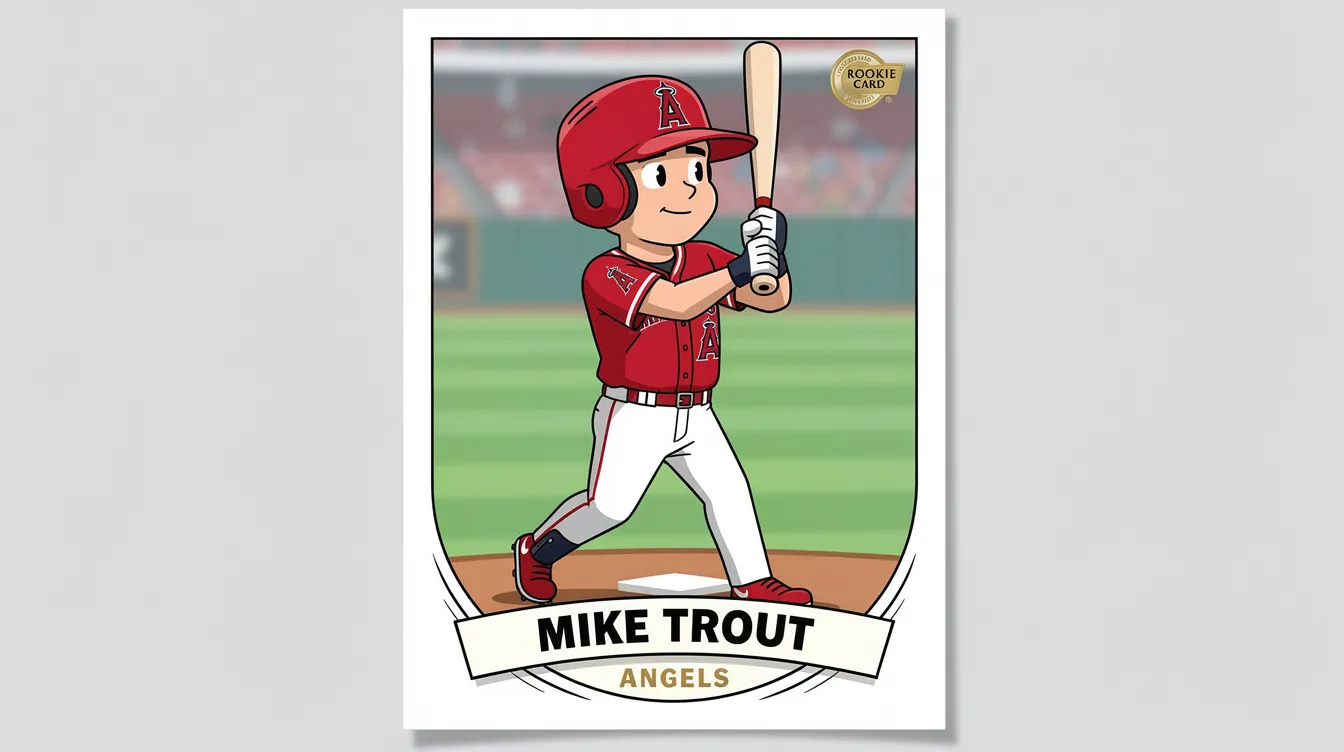
Trout’s dominance with the Los Angeles Angels through the 2010s, multiple MVP awards, and Hall of Fame trajectory made his rookies the modern hobby benchmark. His cards remain highly sought across all formats.
Two key rookies:
2009 Bowman Chrome Draft Prospect Auto #BDPP89: The premier high-end Trout auto. Refractors like /500, Blue /150, and Orange /25 are dream cards. The Superfractor sold for $3.93 million in 2020.
2011 Topps Update US175: The most attainable “iconic” Trout RC. Base, Cognac, Diamond, and Gold /2011 parallels exist. Raw copies trade regularly; PSA 9s command premiums but remain within reach.
Practical approach: Target raw or PSA 9 copies of 2011 Topps Update base first. Consider Walmart Blue Border or factory set versions as cheaper alternatives. Watch for corner whitening and surface dimples.
Albert Pujols: Early-2000s Power Legend
Pujols’ Hall of Fame résumé includes 600+ home runs, 3 MVP awards, and dominance with the St. Louis Cardinals from his 2001 debut. His rookie cards remain cornerstone pieces.
Key rookies:
2001 Bowman Chrome #340 Albert Pujols RC: The signature chromium rookie with refractor parallels.
2001 Topps Chrome Traded #T247 Pujols RC: More attainable yet highly respected, with attractive refractors.
2001 SP Authentic and 2001 Donruss Elite autos: Higher-end options for bigger budgets.
Connect this to 2002 Topps Pristine as “second-year Pujols” content at lower prices. For returning collectors, consider Topps Chrome Traded or base Bowman Chrome in PSA 9—focus on eye appeal over chasing the absolute lowest population parallel.
Ichiro Suzuki: Global Icon with Early-2000s Rookie Heat
Ichiro arrived from Japan in 2001, won AL Rookie of the Year and MVP in the same season with the Seattle Mariners, and amassed over 3,000 MLB hits. His card market reflects international demand from collectors worldwide.
Core rookies:
2001 Topps #726 Ichiro RC: Flagship rookie on a multi-player card with historical importance.
2001 Topps Chrome Traded #T266 Ichiro RC: The go-to chromium rookie with strong refractor demand.
2001 Upper Deck and 2001 Bowman Chrome: Additional but secondary options.
The 1989 Upper Deck Ken Griffey Jr. #1 changed the game for modern card design, and Ichiro’s chromium cards continue that premium legacy. Note that 2002 Topps Pristine and 2008 Topps Chrome Ichiro refractors offer “early-career” options that stay affordable versus true rookies.
Shohei Ohtani: Two-Way Unicorn
Ohtani’s unprecedented two-way success with the Los Angeles Angels and Los Angeles Dodgers, MVP awards, and global popularity drive massive card demand from collectors and investors alike.
Key rookies:
2018 Topps Update US1 and US285 Ohtani rookies: Pitching and batting versions as attainable Topps flagship cards.
2018 Topps Chrome Ohtani RC: Core chrome chase with refractor parallels.
2018 Bowman Chrome Ohtani autos: High-end options for advanced collectors.
Start with 2018 Topps Update base or Rainbow Foil in PSA 9/10 or raw with strong centering. Because Ohtani is mid-career, performance and health will continue impacting values. Focus on mainstream, licensed Topps and Bowman issues first.
Aaron Judge: Modern Power with New York Spotlight
Judge broke the AL single-season home run record in 2022, making his rookie cards a focal point for modern collectors. The Yankees spotlight adds a big market premium to everything he touches.
Main rookies:
2017 Topps Series 1 #287 Aaron Judge RC and2017 Topps Update US99: Core flagship rookies with Gold /2017 and Independence Day parallels.
2017 Topps Chrome Aaron Judge RC: Chromium backbone with base, Prism, Blue, and Gold refractors.
2013 Bowman Draft and Bowman Chrome prospect cards: Earlier pre-rookie options showing Judge in a minor league uniform.
Flagship rookies remain attainable in raw or PSA 9 form. Look for undervalued Judge inserts from mid-tier products like Finest or Stadium Club Chrome compared to Topps Chrome. Paul Skenes and other prospects generate current excitement, but established stars like Judge offer proven track records.
Top 20 Baseball Cards to Collect in 2026 (Ranked by Attainability)
This list blends vintage, modern, star players, and underrated sets—ranked by attainability. An average dedicated collector could realistically own a raw copy or mid-grade slab of each card.
#1: 2011 Topps Update Mike Trout #US175 RC (base)– The best baseball cards start here. Raw copies trade regularly; this card remains the most accessible Trout rookie for any budget.
#2: 2018 Topps Update Shohei Ohtani US1/US285 RC– Either pitching or batting version works. Global demand and current star status make this essential.
#3: 2017 Topps Series 1 Aaron Judge #287 RC– Yankees premium exists but raw copies stay affordable. The fun of collecting includes owning record-breakers.
#4: 2001 Topps Chrome Traded Ichiro Suzuki #T266 RC– The chromium Ichiro standard with international appeal. Hall of Fame locked.
#5: 2001 Topps Chrome Traded Albert Pujols #T247 RC– More attainable than Bowman Chrome while equally respected. A valuable cornerstone for any collection.
#6: 2008 Topps Chrome Clayton Kershaw #196 RC– Future Hall of Famer from an underrated set. Raw often under $50.
#7: 2002 Topps Pristine Albert Pujols– Second-year chromium at lower prices than rookies. The card remains undervalued.
#8: 2002 Topps Pristine Ichiro– Same logic: premium chromium without rookie premiums.
#9: 1989 Upper Deck Ken Griffey Jr. #1 RC– Hobby-defining rookie. Raw or lower grades stay budget-friendly and connect to memorabilia history.
#10: 1980 Topps Rickey Henderson #482 RC– Vintage cornerstone in low to mid-grade. The holy grail of 1980s rookies.
#11: 1968 Topps Nolan Ryan #177 RC– Very low grade but attainable with patience. A rare vintage icon anyone can chase.
#12: 2011 Topps Chrome Refractor Mike Trout– Non-rookie early-career parallel as a cheaper Trout chromium play.
#13: 2018 Topps Chrome Refractor Shohei Ohtani RC– Core chrome in limited quantities relative to base.
#14: 2017 Topps Chrome Aaron Judge RC– Base or basic refractor for chromium representation.
#15: 2009 Bowman Chrome Mike Trout Draft– Non-auto base prospect card. First Bowman appearance without sticker autos pricing.
#16: 2008 Topps Chrome Ichiro Refractor– Underrated set plus Hall of Famer equals smart buy.
#17: 2002 Topps Pristine Joe Mauer RC– Position collectors love catchers. Red Sox and other team collectors often target position players.
#18: 1955 Topps common/HOFer in low grade– Affordable vintage design exposure. The Goudey Gum Company made cards in the 1930s, but 1955 Topps represents attainable golden-era beauty.
#19: 1993 SP Derek Jeter #279 RC– Very low grade or raw with chipping for budget-minded. Recent memory tells us Jeter cards hold value.
#20: 1952 Topps low-number common in poor/fair condition– Aspirational vintage icon. Even damaged copies represent the hobby’s foundation in high grades elsewhere.
How to Decide What Baseball Cards to Collect (Without Getting Overwhelmed)
Returning collectors often feel lost amid parallels, grading, and social media hype. If you left the hobby before chrome and serial numbering took over, the landscape looks foreign. Don’t make the mistake of chasing everything.
Start with 2-3 pillars:
One or two favorite players (Trout, Ohtani, Pujols)
One or two favorite eras (1950s Topps, early-2000s Topps Chrome/Pristine)
One card type to specialize in (flagship rookies, chrome refractors, vintage Hall of Fame base)
Strategy framework:
Set a monthly or yearly budget and stick to singles over sealed wax when starting
Decide if you’re collecting for nostalgia, investment, or both—adjust expectations accordingly
Use sold listings and population reports selectively to avoid overpaying
Check eBay “completed” listings rather than asking prices
Take a moment to enjoy the art and photography. Compare 1955 Topps horizontal designs to the clean shine of 2008 Topps Chrome. Card collecting rewards those who appreciate the hobby beyond pure ROI hunting. Whether you got lucky finding old cards in your parents’ basement or you’re building from scratch, the story of your collection matters.
FAQ
These questions address common concerns not fully covered above, especially for collectors returning after many years away.
What’s the difference between a rookie card and a “1st Bowman” card?
A rookie card is the first officially licensed MLB card released during a player’s rookie season (e.g., 2011 Topps Update Mike Trout US175). A “1st Bowman” like 2009 Bowman Chrome Draft Trout is often the player’s first licensed prospect card, usually before MLB debut. Many collectors treat 1st Bowman Chrome autos as the player’s “true” key card, while Topps flagship rookies are more broadly recognized. Start with flagship rookies and add 1st Bowmans as your budget grows.
Are grading fees worth it for modern baseball cards?
Grading is most worthwhile for high-value cards (key rookies, low-numbered parallels) or cards that appear extremely clean with potential for gem-mint grades. Cheap base cards from recent years usually aren’t worth the $20-50+ fee unless they feature superstars like Ohtani or Trout and look flawless. Practice pre-grading by comparing your raw cards to online gem-mint scans, then run the math: estimated slab value minus grading fee versus raw value.
How do I avoid overpaying for baseball cards online?
Always check “sold” or “completed” listings on eBay rather than asking prices. Compare specific recent sold listings for the exact card you want. Set alerts, watch auctions end naturally, and avoid impulse buys after big games or trade news. Buying during the offseason or during a player’s slump often yields better prices for prospects and figures in the modern market.
Should I focus on complete sets or just singles?
Building complete sets (2008 Topps Chrome base, 2002 Topps Pristine) works great for nostalgia and display but ties up money in commons that may not appreciate. Singles—especially key rookies and star refractors—offer more flexibility if you sell or pivot focus. Start with singles of favorite players and only tackle full set builds once your budget and stock of storage solutions can handle volume.
Are non-licensed baseball cards (no team logos) worth collecting?
Non-licensed products (often Panini brands like Prizm or Donruss) lack MLB team logos, making them generally less valuable than licensed Topps and Bowman issues. Unlike licensed cards, they don’t show team imagery. Some collectors enjoy them for design and lower entry costs, and certain parallels or autos can hold value for star players. Make licensed Topps and Bowman your foundation; use unlicensed cards as optional, budget-friendly side pieces if the hunt excites you.
Disclosures
Securities and investment advisory services offered through Integrity Alliance, LLC, Member SIPC www.sipc.org (opens in a new window). Integrity Wealth is a marketing name for Integrity Alliance, LLC. Revolutionary Wealth LLC is not affiliated with Integrity Wealth. This site is published for residents of the United States only. Representatives may only conduct business with residents of the states and jurisdictions in which they are properly registered. Therefore, a response to a request for information may be delayed until appropriate registration is obtained or exemption from registration is determined. Not all services referenced on this site are available in every state and through every advisor listed. Tax and legal services are not offered through Integrity Wealth.
Full disclosures
Neither Asset Allocation nor Diversification guarantee a profit or protect against a loss in a declining market. They are methods used to help manage investment risk.
Active portfolio management, including market timing, can subject longer term investors to potentially higher fees and can have a negative effect on the long-term performance due to the transaction costs of the short-term trading. In addition, there may be potential tax consequences from these strategies. Active portfolio management and market timing may be unsuitable for some investors depending on their specific investment objectives and financial position. Active portfolio management does not guarantee a profit or protect against a loss in a declining market.
Rebalancing/Reallocating can entail transaction costs and tax consequences that should be considered when determining a rebalancing/reallocation strategy.
Tax-loss harvesting is a strategy of selling securities at a loss to offset a capital gains tax liability. It is typically used to limit the recognition of short-term capital gains, which are normally taxed at higher federal income tax rates than long-term capital gains, though it is also used for long-term capital gains.
Not associated with or endorsed by the Social Security Administration, Medicare or any other government agency. Maximizing your Social Security Benefits assumes foreknowledge of your date of death. If as an example you wait to claim a higher monthly benefit amount but predecease your average life expectancy, it would have been better to claim your benefits at an earlier age with reduced benefits.
Any references to protection or steady and reliable income streams refer only to fixed insurance products. References to protection can also refer to estate planning. They do not refer, in any way, to securities or investment advisory products.
Fixed Annuities are long term insurance contracts and there is a surrender charge imposed generally during the first 5 to 7 years that you own the annuity contract. Withdrawals prior to age 59 1/2 may result in a 10% IRS tax penalty, in addition to any ordinary income tax. Any guarantees of the annuity are backed by the financial strength of the underlying insurance company.
Mutual Funds are sold by prospectus. Please consider the investment objectives, risks, charges, and expenses carefully before investing in Mutual Funds. The prospectus, which contains this and other information about the investment company, can be obtained directly from the Fund Company or your financial professional. Be sure to read the prospectus carefully before deciding whether to invest. An investment in the Fund involves risk, including possible loss of principal.
A REIT is a security that sells like a stock on the major exchanges and invests in real estate directly, either through properties or mortgages. REITs receive special tax considerations and typically offer investors high yields, as well as a highly liquid method of investing in real estate. There are risks associated with these types of investments and include but are not limited to the following: Typically no secondary market exists for the security listed above. Potential difficulty discerning between routine interest payments and principal repayment. Redemption price of a REIT may be worth more or less than the original price paid. Value of the shares in the trust will fluctuate with the portfolio of underlying real estate. Involves risks such as refinancing in the real estate industry, interest rates, availability of mortgage funds, operating expenses, cost of insurance, lease terminations, potential economic and regulatory changes. This is neither an offer to sell nor a solicitation or an offer to buy the securities described herein. The offering is made only by the Prospectus.
Converting an employer plan account or Traditional IRA to a Roth IRA is a taxable event. Increased taxable income from the Roth IRA conversion may have several consequences including but not limited to, a need for additional tax withholding or estimated tax payments, the loss of certain tax deductions and credits, and higher taxes on Social Security benefits and higher Medicare premiums. Be sure to consult with a qualified tax advisor before making any decisions regarding your IRA.
Indexed annuities are insurance contracts that, depending on the contract, may offer a guaranteed annual interest rate and some participation growth, if any, of a stock market index. Such contracts have substantial variation in terms, costs of guarantees and features and may cap participation or returns in significant ways. Any guarantees offered are backed by the financial strength of the insurance company. Surrender charges apply if not held to the end of the term. Withdrawals are taxed as ordinary income and, if taken prior to 59 1/2, a 10% federal tax penalty. Investors are cautioned to carefully review an indexed annuity for its features, costs, risks, and how the variables are calculated.
Please consider the investment objectives, risks, charges, and expenses carefully before investing in Variable Annuities. The prospectus, which contains this and other information about the variable annuity contract and the underlying investment options, can be obtained from the insurance company or your financial professional. Be sure to read the prospectus carefully before deciding whether to invest.
The investment return and principal value of the variable annuity investment options are not guaranteed. Variable annuity sub-accounts fluctuate with changes in market conditions. The principal may be worth more or less than the original amount invested when the annuity is surrendered.
QLACs cannot be purchased with Roth or Inherited IRA dollars; value of such IRAs cannot be included in determining 25% premium limit. If Funding Source is Traditional IRA, 25% limit is calculated by combining the total value of all Traditional IRAs as of December 31st of the previous year. If Funding source is Employer sponsored qualified plan (401k, 403b and governmental 457b), 25% limit is calculated on an individual plan basis based on the plan's account value on the previous day's market close. If you previously purchased a QLAC, the calculation of your 25% limit is more complicated. Please contact an attorney or tax professional for additional details. Any guarantees of the annuity are backed by the financial strength of the underlying insurance company.
The projections or other information generated by Monte Carlo analysis tools regarding the likelihood of various investment outcomes are hypothetical in nature, are based on assumptions that you provide which could prove to be inaccurate over time, do not reflect actual investment results, and are not guarantees of future results. Results may vary with each use and over time.
This material is for general informational purposes only and is not intended to provide specific investment, tax, or legal advice or recommendations for any individual. Consult with your own tax or legal professional regarding your specific situation before acting on any information presented here. The information has been developed from sources believed to be providing accurate information, but no representation is made as to its accuracy or completeness.
Cash balance and other qualified retirement plan strategies described here are general in nature; actual contribution limits, deductibility, and plan design depend on individual circumstances, plan documents, and applicable IRS rules, and should be reviewed with a qualified plan actuary or administrator.