

You spent years finding it. Maybe decades. A matching-numbers 1969 Camaro Z/28 or a pre-war Duesenberg that turns heads at every concours. You know what it's worth on the open market. But do you know what the IRS thinks it's worth - and more importantly, how they plan to tax it when you sell?
The answer isn't as simple as "it's old, so it's an antique." The IRS plays by a different set of rules than your state DMV or your insurance company. And those rules can cost you tens of thousands of dollars if you get them wrong.
Key Takeaways
- 01An antique or classic car's classification as a collectible depends on its use and intent - not just its age. If held primarily for investment and appreciation, the IRS can treat it as a collectible.
- 02Long-term capital gains on collectibles are subject to a maximum rate of 28%, which is higher than the standard 0–20% rates most investors pay on stocks and mutual funds.
- 03How you use your antique car - for personal enjoyment, as a business asset, or as a collectible investment - drives whether gains are taxable at collectible rates and whether losses are deductible at all.
- 04Collectors who own antique cars alongside sports cards, comics, watches, and other collectible assets benefit from coordinated income tax, estate, and business tax planning across their entire collection.
- 05Revolutionary Wealth offers specialized collectibles planning and has helped collectors save tens of thousands in taxes. Book a call to discuss your situation.
How the IRS Treats an Antique Car: Quick Answer
The IRS typically treats an antique car held for appreciation - think a 1967 Shelby GT500 stored in a climate-controlled garage, insured for agreed value, and displayed at shows - as a collectible, similar to fine art or rare coins. The IRS taxes collectibles at a maximum rate of 28% on long-term gains, compared to the 15–20% rate that generally applies to stocks, bonds, and mutual funds. Long-term capital gains on collectibles exceed those typical 0–20% rates, which means owning a high-value car can cost you more at sale than owning an equivalent dollar amount in a stock portfolio.

Now contrast that with an older car you drive every day. If it's just personal property used to get around - a daily driver that happens to be 30 years old - it still may generate taxable gains when sold for a profit, but it isn't usually treated as a "collectible" in the same way. The IRS does not classify classic cars for federal tax exemptions simply because a state DMV calls them "antique" or "classic."
If you're sitting on a six-figure or seven-figure car collection, now is the time to book a call with Revolutionary Wealth to review how your vehicles are classified for tax purposes.
What Does the IRS Consider a "Collectible"?
The Internal Revenue Code uses the term "collectible" in two critical places. Section 408(m) governs retirement accounts, listing examples like works of art, rugs, antiques, metals, stamps, coins, and even any alcoholic beverage. Section 1(h) sets the special capital gains rates. Collectibles include classic cars, art, and rare coins - and the list isn't exhaustive.
In plain language, a collectible is generally tangible personal property held primarily for its rarity and investment potential rather than daily use. The IRS historically did not include vehicles in the statutory collectibles definition by name, but it retains the authority to classify them as other tangible personal property under the statute. Courts and practitioners have applied collectible treatment to high-end cars for decades.
This matters beyond cars. If you own graded sports cards, PSA 10 Pokémon cards, CGC-graded comics, or Swiss watches like Patek Philippe, those assets are all considered collectibles under the same rules. For a deeper look at how these rules play out across categories, see our guide on how to navigate tax implications when buying, selling, and inheriting collectibles.
What really matters for income tax and capital gains purposes is the owner's intent and usage - whether the item is held as tangible property for personal enjoyment or as a collectible investment that may later be sold for profit.
When Is an Antique or Classic Car Treated as a Collectible Investment?
Classic cars are typically defined as 20–25 years old by most states and insurers - and many states offer reduced registration fees for classic vehicles, while states like Virginia exempt antique vehicles from emissions inspections. But antique car classification is not determined solely by age and can depend on historical significance. Registration requirements vary significantly by state, and collectors must register vehicles with their state DMV, but none of that controls federal tax treatment.
The IRS focuses on investment intent and pattern of use. Practical factors advisors and the IRS look at include:
Whether the car is stored in a dedicated collection facility
How rarely it is driven (mileage logs matter)
Whether it is insured for high agreed value
Whether it is documented, photographed, exhibited, or consigned to auctions
Whether it was purchased with the expectation of appreciation
Compare a daily-driven 1999 Honda Civic with 200,000 miles against a concours-level 1969 Camaro Z/28 kept in climate-controlled storage and shown at Amelia Island. The IRS can evaluate a vehicle's collectible status based on its rarity and condition. These two cars lead to entirely different presumptions. To classify a car as a collectible, it must primarily serve as an investment rather than an everyday vehicle.
Holding a collectible for over one year triggers the 28% maximum rate on long-term gains. At Revolutionary Wealth, we help clients document intent and usage so their antique car and other collectible cars receive consistent, defensible treatment in their broader tax planning.
Capital Gains on Antique and Classic Cars
Taxable gains occur when you sell an antique car for more than your adjusted cost basis. Say you bought a 1969 Camaro Z/28 for $200,000 and sold it two years later for $600,000. The $400,000 gain, treated as a collectible held more than a year, faces a maximum 28% federal rate - resulting in $112,000 in federal tax. If the same gain qualified for the standard 15–20% long-term rate, you'd owe $60,000–$80,000. That's up to $52,000 more because of collectible treatment.
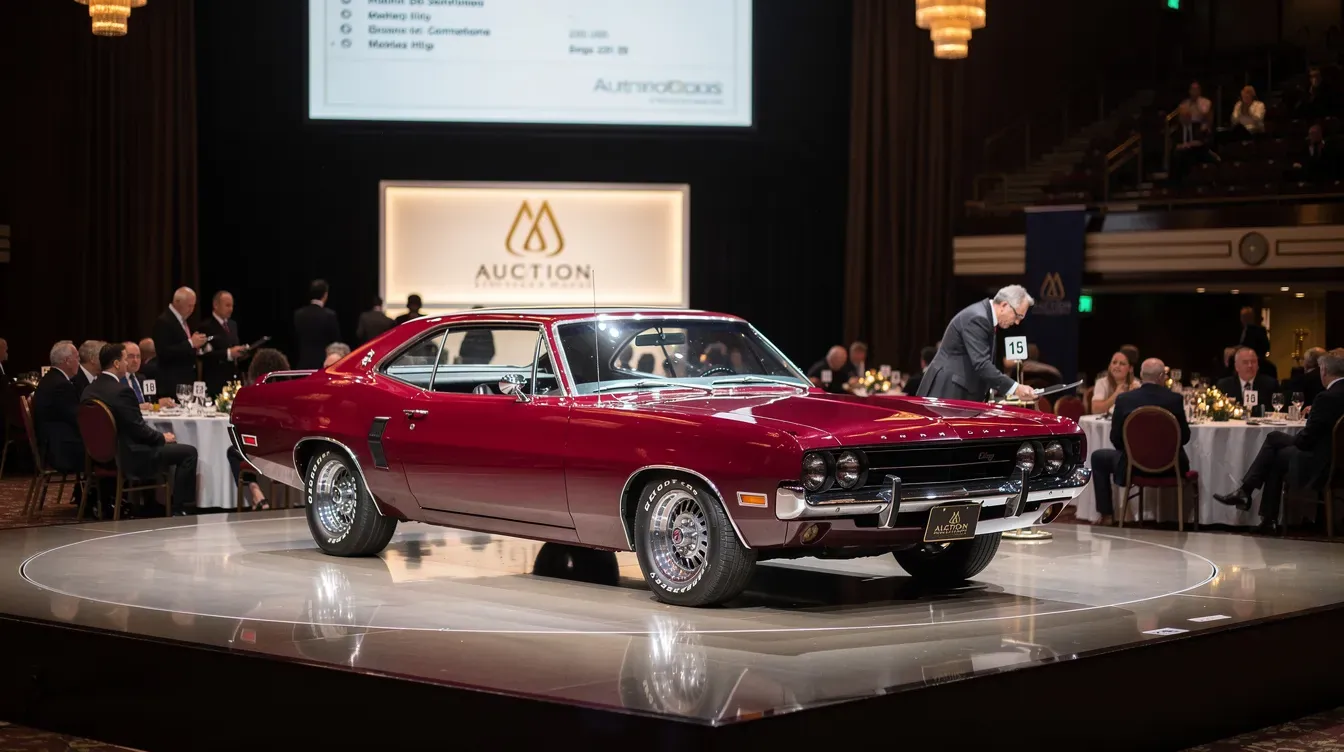
Short-term gains on collectibles - cars held one year or less - are taxed at ordinary income rates, which for high earners can actually exceed 28%. Capital gains on collectible cars can be taxed at up to 28% on the long-term side.
Here's where it stacks up even more. Capital gains on collectibles may incur an additional 3.8% net investment income tax for high earners with modified AGI above $200,000 (single) or $250,000 (married filing jointly). Sales of collectibles may incur federal, state, and local income taxes on top of that. In a high-tax state like California or New York, the combined effective rate can push past 40%.
This is why reducing income taxes as a high earner requires more than just a good CPA. It requires a plan.
Is Your Antique Car Personal Property, Business Asset, or Collectible?
The same vehicle can fall into different tax categories depending on how it is actually used and documented over multiple years. Here's the breakdown:
Personal property use: An older Porsche 911 driven on weekends for fun but not treated as part of a formal collection. Gains may still be taxable, but sales of personal-use antique cars at a loss are nondeductible for tax purposes. You cannot deduct what the IRS considers a personal loss.
Business asset use: A 1965 Mustang owned by an LLC and used as a promotional vehicle for a classic-car-themed restaurant or YouTube channel. Business mileage, depreciation (subject to listed property rules and restrictions applicable to passenger automobiles), and other expenses may be deductible if well-documented. But depreciation limits and recapture rules apply.
Collectible investment use: A high-value Ferrari, Lamborghini, or pre-war Bugatti held primarily for appreciation, displayed alongside fine art or rare watches. Gains on sale clearly fall into the collectibles capital gains regime. Losses, unlike personal use, may be deductible because the asset was held for investment purposes.
Revolutionary Wealth can help you clarify the status of each vehicle and coordinate with your CPA and attorney so income tax, capital gains, and estate planning all align with real-world ownership and usage.
How Collectible Treatment Affects Your Broader Collection (Cards, Comics, Watches & More)
If you own antique cars alongside graded sports cards, Pokémon cards, CGC-graded comics, and Swiss watches, you're not just a car collector - you're a multi-asset collector. And from an IRS viewpoint, many of these assets share the same 28% long-term capital gains ceiling.

Consider a scenario: you sell a 1973 Porsche 911 for a $300,000 gain and liquidate a portfolio of rare comics for another $200,000 gain in the same year. Both are treated as collectible gains, combined for income tax purposes. Together they could trigger higher brackets, push you into net investment income tax territory, and create a six-figure federal bill.
This is where coordinated tax planning across all collectibles becomes far more effective than handling each asset in isolation. For example, you might realize capital losses in a sports card portfolio in the same year you sell a high-value antique car - offsetting taxable gains and keeping more dollars in your pocket.
Revolutionary Wealth helps clients inventory their full collectible universe and build an integrated tax and estate plan rather than making isolated, one-off decisions for each sale.
Case Study: How Planning Around a $1 Million Collectible Can Save Tens of Thousands in Tax
Here's a real example of what happens when tax planning meets the collectibles world.
Revolutionary Wealth worked with a collector selling a single high-end Pokémon card for roughly $1,000,000. Through deal structuring, timing, and coordination with the client's tax team, we helped reduce the tax bill by approximately $86,000. That's not a hypothetical. That's money that stayed in the client's account instead of going to the IRS.
How do savings like that happen? In broad strokes:
Better choice of tax year - timing the sale when other income is lower
Installment sale terms that spread gain recognition across multiple years
Capturing capital losses elsewhere in the portfolio to offset the collectible gain
Charitable strategies involving contribution to a qualified charity that reduce taxable gains
Now connect those lessons to antique and classic cars. If you're planning to sell a seven-figure Ferrari or a rare pre-war Alfa Romeo, the same planning techniques can dramatically change your after-tax outcome. The difference between selling in December versus January, or structuring the deal as an installment sale versus a lump sum, can be worth tens of thousands.
If you're sitting on large unrealized gains in antique cars, comics, watches, or cards, book a call with Revolutionary Wealth before you sign a bill of sale or auction consignment agreement.
Tax Planning Strategies for Antique and Collectible Car Owners
Here's a practical checklist - not deep technical detail, but planning ideas that save real dollars:
Time sales into lower-income years. Retirement transitions, sabbaticals, or business-exit windows can reduce combined income tax, capital gains, and net investment income tax on collectible gains. Even gains on qualified small business stock, if sold in the same year, affect your bracket.
Use capital losses to offset gains. Underperforming stocks, real estate, or lower-tier collectibles can generate capital losses that offset taxable gains from the sale of an antique car in a high-gain year.
Consider charitable options. Donating a highly appreciated collectible car to a qualified charity or museum - or contributing a fractional interest - potentially allows a fair market value deduction while avoiding recognition of capital gains. This can yield significant tax cuts on your overall liability.
Document everything. Documentation of purchase price and improvement costs is crucial for determining tax implications on sale. Keep purchase contracts, restoration invoices, agreed-value insurance policies, and periodic professional appraisals.
Explore advanced structures. Installment sales, charitable remainder trusts, or entity structuring for business-related vehicles are options Revolutionary Wealth can coordinate - but they require careful modeling with tax and legal professionals.
Antique Cars, Retirement Accounts, and Prohibited "Collectible" Investments
The IRS places tight restrictions applicable to acquiring collectibles inside IRAs and other qualified retirement plans under IRC Section 408(m). You cannot hold collectibles, including antique cars, in an Individual Retirement Account. There are limited exceptions for certain coins and bullion, but cars are not among them.
If an individually directed IRA or qualified plan buys a collectible - for example, an antique car held for the owner's benefit - the transaction is treated as a deemed distribution equal to the car's cost. That triggers immediate income tax and a potential 10% additional tax penalty if the owner is under age 59½. The deemed distribution is reported on Form 1099-R.
Collectors tempted by marketing pitches about holding classic cars, art, or rare coins inside "self-directed IRAs" should proceed carefully. What sounds like a clever plan can become a very expensive mistake.
Revolutionary Wealth helps clients evaluate whether retirement account–based structures for collectibles are appropriate or whether keeping collectibles in taxable entities alongside other personal property offers a better risk-reward balance.
Estate and Legacy Planning for Antique Cars and Other Collectibles
Many serious collectors are less worried about year-to-year income tax and more focused on what happens to their antique car collection when they transfer ownership to heirs.
The concept of "step-up in basis" at death is critical. The fair market value of an inherited antique car is used for tax basis purposes upon selling. If a 1930s Duesenberg is appraised at $2,500,000 at the owner's death, heirs receive that as their basis - and if they sell shortly after, they may owe little or no capital gains tax. This benefit can dwarf any annual tax planning.
Gifting a classic car during your lifetime is another matter entirely. Gifts of antique cars are subject to federal gift tax rules and exclusions. Gifting a classic car may require a federal gift tax return if the value exceeds $18,000 per recipient per year.
For very large estates, federal estate tax and state taxes may be a bigger concern than capital gains. Properly structured entities, trusts, insurance, and clearly written instructions can reduce family disputes and fund tax payments without forced sales at bad times.
At Revolutionary Wealth, we help collectors integrate antique cars and collectibles into a broader estate and legacy plan, including coordination with estate attorneys and CPAs. If you're thinking about how to transfer wealth to your kids without a massive tax bill, this is where the conversation starts.
When to Bring in Professional Help (and How Revolutionary Wealth Supports Collectors)
A DIY approach gets risky fast in these scenarios:
Selling a car worth more than $250,000
Receiving a high-value gift or inheritance of collectible assets
Running a collection-related business across multiple entities or states
Juggling antique cars, trading cards, comics, and watches with different cost bases
Revolutionary Wealth is a financial advisory firm experienced in tax strategy, retirement planning, and collectibles planning for clients who own antique cars, rare trading cards, high-end watches, and similar assets. We build a complete net-worth picture - including personal property and collectible cars - model after-tax sale scenarios, and align transactions with retirement and business-exit timelines.
We saved a Pokémon collector $86,000 on a single $1,000,000 card by structuring the deal intelligently. We do the same for car collectors, watch collectors, and anyone whose collection has become a meaningful part of their financial life.
Book a call with Revolutionary Wealth for a confidential discussion about your antique car and collectibles strategy.
FAQ
Below are common questions antique car and collectibles owners ask that weren't fully addressed above.
Does the IRS have a specific year or definition that makes a car a "collectible"?
No. The IRS does not use a strict age cutoff - like 25 years - to define a collectible car. Treatment depends on how the car is used and whether it is primarily held for investment or for personal transportation. State DMV or insurance definitions of "antique" or "classic" (often 20–25 years old) do not control federal income tax classification, though they may serve as helpful circumstantial evidence. Some states offer reduced registration fees for classic cars, and classic cars may be exempt from emissions testing in certain states, but those benefits don't affect IRS collectible treatment.
Can I deduct a loss if I sell my antique car for less than I paid?
If the car was primarily for personal use - a hobby or pleasure vehicle - losses are generally considered personal and not deductible for income tax purposes. However, if the car was truly held for investment purposes or used as a business asset, some or all of the loss might be deductible, depending on documentation and how the asset was classified in prior tax years. The distinction matters in many cases more than people expect.
Do I owe income tax if I trade my classic car for another car instead of selling it?
Under current law, IRS regulations prohibit like-kind exchange treatment (Section 1031) for personal property such as automobiles. That changed after the Tax Cuts and Jobs Act of 2017. Trading a collectible car for another may still trigger a taxable gain based on fair market values at the time of exchange. Collectors considering complex trades or multi-car swaps should consult a tax professional before finalizing the transaction.
How should I document my antique car's value for tax and estate purposes?
Keep detailed records: purchase contracts, restoration invoices, auction results, insurance agreed-value policies, and periodic professional appraisals for significant vehicles. Good documentation is crucial for establishing basis, supporting valuations for estate and gift tax returns, and defending your position in the event of an IRS inquiry. Invest the time now - it pays dividends later.
When should I contact Revolutionary Wealth about my antique car collection?
Reach out before major events: listing a car for auction, accepting a private offer, transferring a vehicle to an heir, or restructuring ownership as part of retirement or business-exit planning. The worst time to plan is after the sale closes. Book a call to discuss your antique car, classic car, and broader collectibles planning needs.
Disclosures
This blog contains general information that may not be suitable for everyone. The information contained herein should not be construed as personalized investment advice. There is no guarantee that the views and opinions expressed in this blog will come to pass. Investing in the stock market involves gains and losses and may not be suitable for all investors. Information presented herein is subject to change without notice and should not be considered as a solicitation to buy or sell any security. Revolutionary Wealth LLC does not offer legal or tax advice. Please consult the appropriate professional regarding your individual circumstance. Past performance is no guarantee of future results.
Mutual Funds are sold by prospectus. Please consider the investment objectives, risks, charges, and expenses carefully before investing in Mutual Funds. The prospectus, which contains this and other information about the investment company, can be obtained directly from the Fund Company or your financial professional. Be sure to read the prospectus carefully before deciding whether to invest. An investment in the Fund involves risk, including possible loss of principal.
Rebalancing/Reallocating can entail transaction costs and tax consequences that should be considered when determining a rebalancing/reallocation strategy.
A REIT is a security that sells like a stock on the major exchanges and invests in real estate directly, either through properties or mortgages. REITs receive special tax considerations and typically offer investors high yields, as well as a highly liquid method of investing in real estate. There are risks associated with these types of investments and include but are not limited to the following: Typically no secondary market exists for the security listed above. Potential difficulty discerning between routine interest payments and principal repayment. Redemption price of a REIT may be worth more or less than the original price paid. Value of the shares in the trust will fluctuate with the portfolio of underlying real estate. Involves risks such as refinancing in the real estate industry, interest rates, availability of mortgage funds, operating expenses, cost of insurance, lease terminations, potential economic and regulatory changes. This is neither an offer to sell nor a solicitation or an offer to buy the securities described herein. The offering is made only by the Prospectus.
Diversification does not guarantee a profit or protect against a loss in a declining market. It is a method used to help manage investment risk.
Converting an employer plan account or Traditional IRA to a Roth IRA is a taxable event. Increased taxable income from the Roth IRA conversion may have several consequences including but not limited to, a need for additional tax withholding or estimated tax payments, the loss of certain tax deductions and credits, and higher taxes on Social Security benefits and higher Medicare premiums. Be sure to consult with a qualified tax advisor before making any decisions regarding your IRA.
Indexed annuities are insurance contracts that, depending on the contract, may offer a guaranteed annual interest rate and some participation growth, if any, of a stock market index. Such contracts have substantial variation in terms, costs of guarantees and features and may cap participation or returns in significant ways. Any guarantees offered are backed by the financial strength of the insurance company. Surrender charges apply if not held to the end of the term. Withdrawals are taxed as ordinary income and, if taken prior to 59 ½, a 10% federal tax penalty. Investors are cautioned to carefully review an indexed annuity for its features, costs, risks, and how the variables are calculated.
Not associated with or endorsed by the Social Security Administration, Medicare or any other government agency. Maximizing your Social Security Benefits assumes foreknowledge of your date of death. If as an example you wait to claim a higher monthly benefit amount but predecease your average life expectancy, it would have been better to claim your benefits at an earlier age with reduced benefits.
Please consider the investment objectives, risks, charges, and expenses carefully before investing in Variable Annuities. The prospectus, which contains this and other information about the variable annuity contract and the underlying investment options, can be obtained from the insurance company or your financial professional. Be sure to read the prospectus carefully before deciding whether to invest.
The investment return and principal value of the variable annuity investment options are not guaranteed. Variable annuity sub-accounts fluctuate with changes in market conditions. The principal may be worth more or less than the original amount invested when the annuity is surrendered.
QLACs cannot be purchased with Roth or Inherited IRA dollars; value of such IRAs cannot be included in determining 25% premium limit. If Funding Source is Traditional IRA, 25% limit is calculated by combining the total value of all Traditional IRAs as of December 31st of the previous year. If Funding source is Employer sponsored qualified plan (401k, 403b and governmental 457b), 25% limit is calculated on an individual plan basis based on the plan’s account value on the previous day’s market close. If you previously purchased a QLAC, the calculation of your 25% limit is more complicated. Please contact an attorney or tax professional for additional details. Any guarantees of the annuity are backed by the financial strength of the underlying insurance company.
The projections or other information generated by Monte Carlo analysis tools regarding the likelihood of various investment outcomes are hypothetical in nature, are based on assumptions that you provide which could prove to be inaccurate over time, do not reflect actual investment results, and are not guarantees of future results. Results may vary with each use and over time.
Investing in alternative assets involves higher risks than traditional investments and is suitable only for sophisticated investors. Alternative investments are often sold by prospectus that discloses all risks, fees, and expenses. They are not tax efficient and an investor should consult with his/her tax advisor prior to investing. Alternative investments have higher fees than traditional investments and they may also be highly leveraged and engage in speculative investment techniques, which can magnify the potential for investment loss or gain and should not be deemed a complete investment program. The value of the investment may fall as well as rise and investors may get back less than they invested.
How we can help
Collections & Collectibles PlanningValuation, tax, and estate planning for sports cards, TCG, cars, watches, and other collections — so what took a lifetime to assemble isn't auctioned off to cover a tax bill.